

















Understanding Linseed Oil
The Painter’s Essential Medium
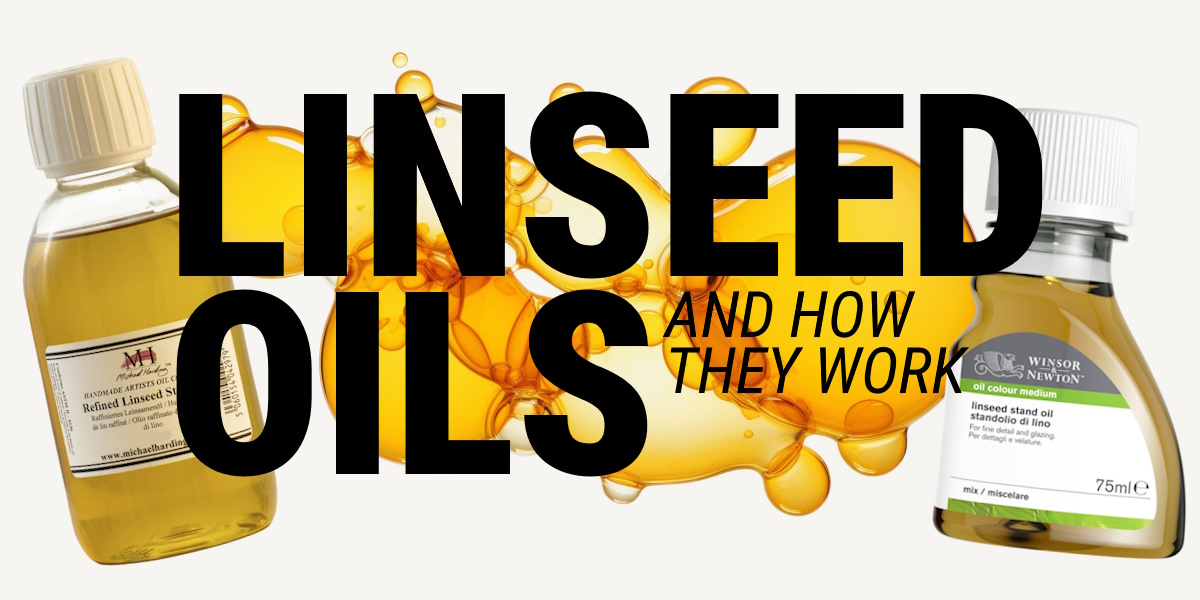
An indispensable tool for any oil painter, Linseed Oil is a versatile medium that acts as both a blender and modifier for oil paints.
Derived from the seeds of the flax plant (Linum Usitatissimum) and adopted in oil painting as early as the 12th Century, Linseed Oil is the binder used in most oil paints and seamlessly blends with oil paint pigments for smoother, more workable colours, greater technical control and expressive depth in your work.
Today we’ll be discussing Linseed Oil, its many forms, their benefits and how they can best be applied to unlock your oil painting dreams.
.
Why Use Linseed Oil in Oil Painting?
Linseed Oil can completely transform the behaviour of your oil paints, affecting everything from texture to drying times and even their durability. Below is just a handful of the benefits you can enjoy when using Linseed Oil.
And remember, as with all the best things in life, when you’re using Linseed Oil, moderation is key.
Enhanced Flow & Consistency
Linseed Oil both lowers the viscosity and increases the wetting of pigments in oil paints, allowing for smoother brushstrokes and easier layering (glazes) without the nuisance of brush drag. Adding just a few small drops to your paint provides longer, sleeker brushstrokes and easier blending for transitions or fine details.
As Linseed Oil is the binder in most oil paints, when you add a little more it lubricates pigment particles and thins the colour without introducing volatile solvents. For very smooth glazing, artists often use Stand Oil as it’s thicker, levels beautifully & reduces brush marks (but it dries slower, so is best used sparingly or thinned for glazing).
Improved Paint Durability
Able to form one of the strongest, most elastic films among all the drying oils, Linseed Oil oxidises and cross-links into a continuous polymer that binds pigment particles into a tough, flexible layer able to resist cracking & flaking (potentially for decades).
The strength of this durability is entirely dependent on the volume of Linseed Oil used during the process. When you’re working, it’s best to follow the “fat over lean” rule, as too much oil in a layer (or an excessively “fat” layer) can lead to wrinkling and other potential issues due to the surface skin drying before the underlying oil has cured.
For more on the “fat over lean” rule (along with other exciting oil painting hints & tips), check out our previous Oil Colour Drying Time blog!
Boosted Colour Depth & Gloss
Linseed Oil increases both the transparency and gloss of oil paints by altering the refractive relationship between the pigment and binder (very scientific, we know). This produces thinner, more translucent layers that allow light to penetrate and reflect from lower layers, creating greater perceived depth & saturation (especially noticeable in darker tones and glazes).
Properly used, even just a small amount of Linseed Oil can produce incredibly rich, smooth colours. However, if overused, it can make surfaces too glossy or potentially cause defects like sinking or wrinkling, so balance is key.
Many oil painters employ Linseed Oil to exploit depth in their underlayers and glazes before finishing with a varnish, to finish and unify the sheen.
.
Different Types of Linseed Oil
As with all things in life, Linseed Oil appears in many forms, each tailored for a specific use or effect. Available from well-known brands like Winsor & Newton, Robersons and Michael Harding, below is a brief rundown of the most popular variations.
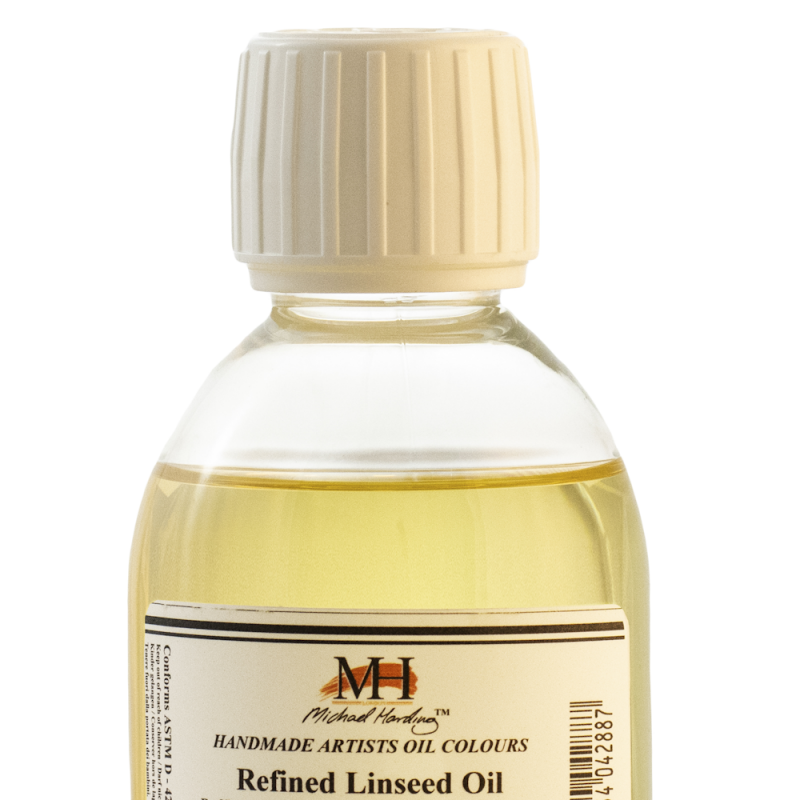
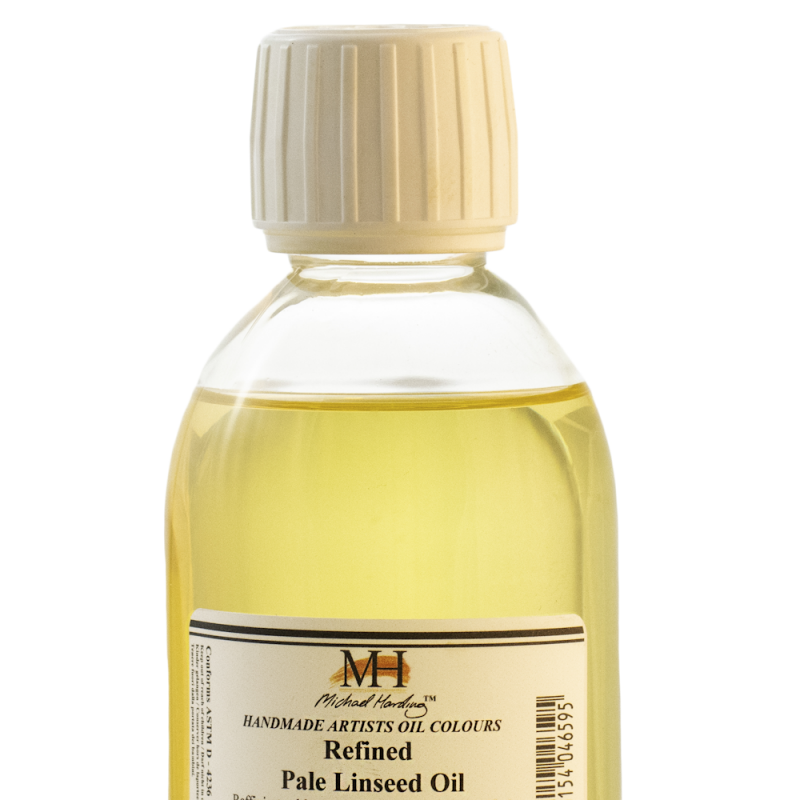
Refined Linseed Oil
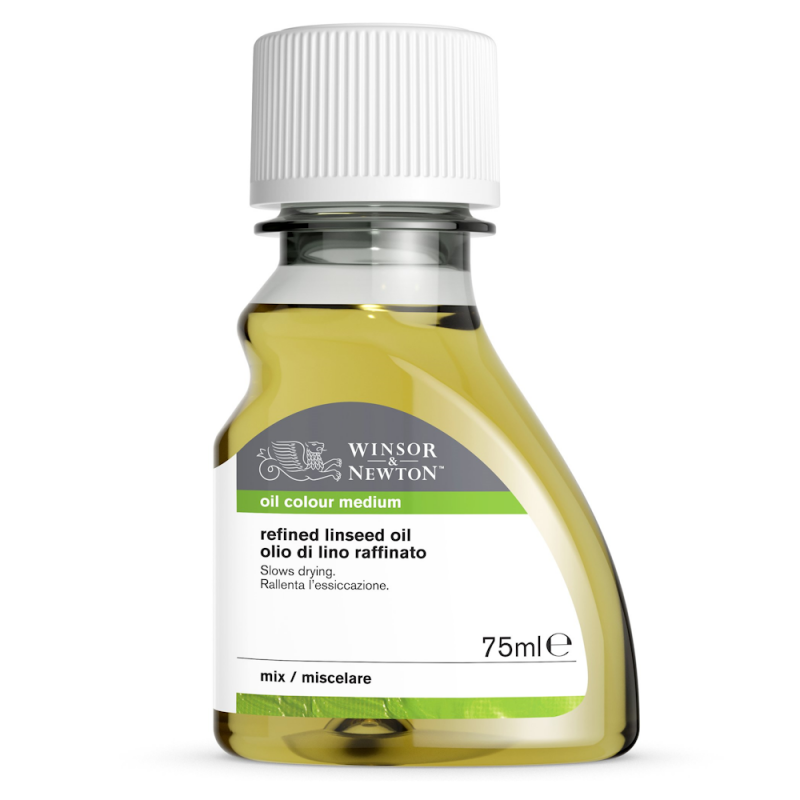
The most common form found in the wild, Refined Linseed Oil is a clear, low-viscosity medium that makes oil colours “fatter”, reducing their consistency whilst increasing gloss & transparency.
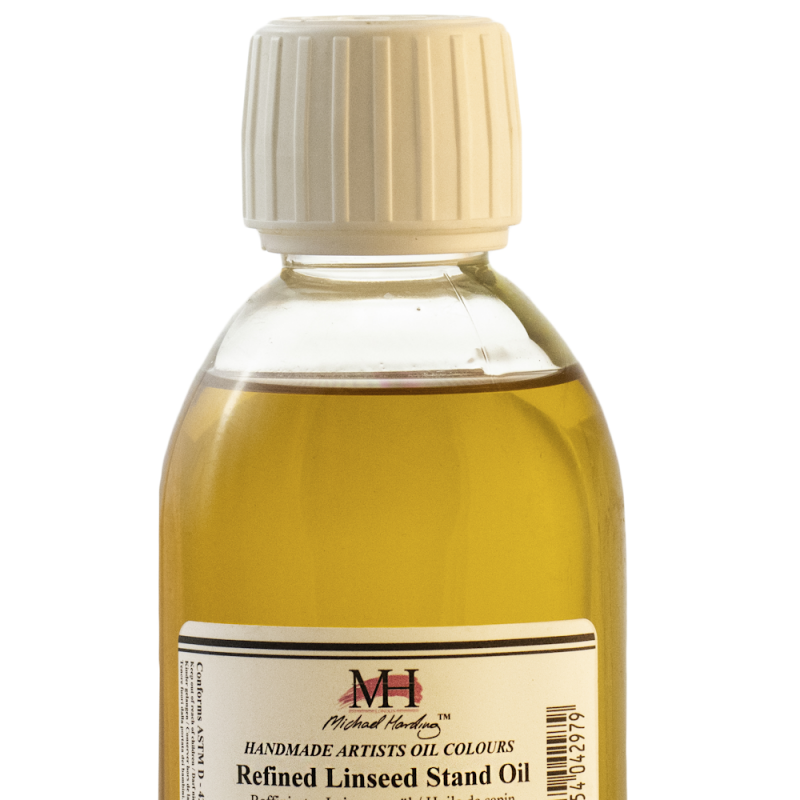
Stand Oil
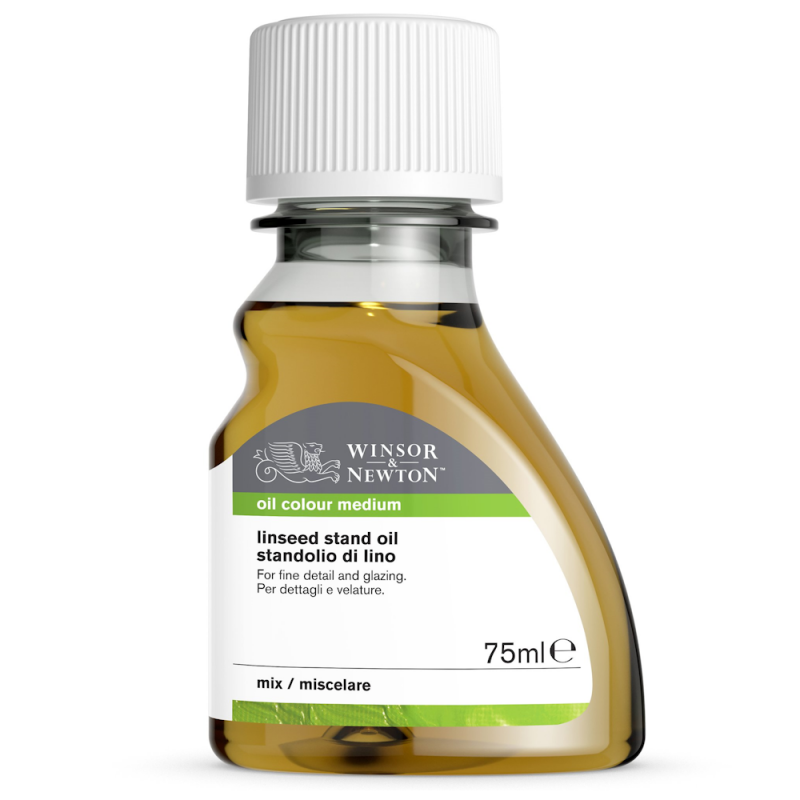
Linseed Stand Oil is a slightly thickened variant that slows drying of oil paints while producing a robust, enamel-like finish with no brush marks & excellent levelling. Ideal for glazing, or as an alternative to Refined Linseed Oil.
Drying Linseed Oil
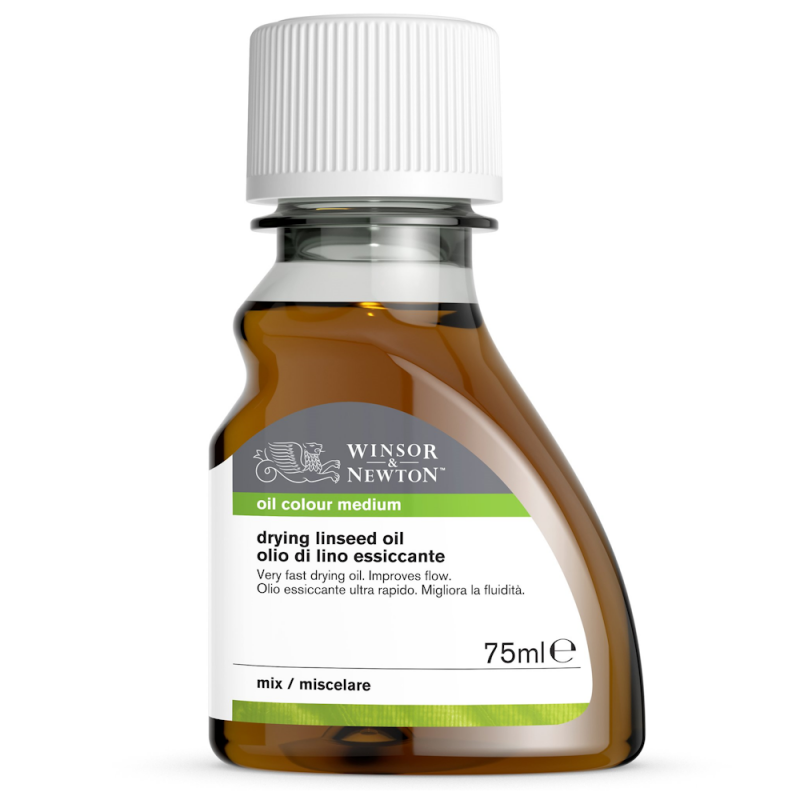
Promoting the fastest drying rate of all Linseed Oils, Drying Linseed Oil decreases the consistency of oil paints, increasing their transparency and gloss whilst vastly accelerating their drying times.
Cold Pressed Linseed Oil
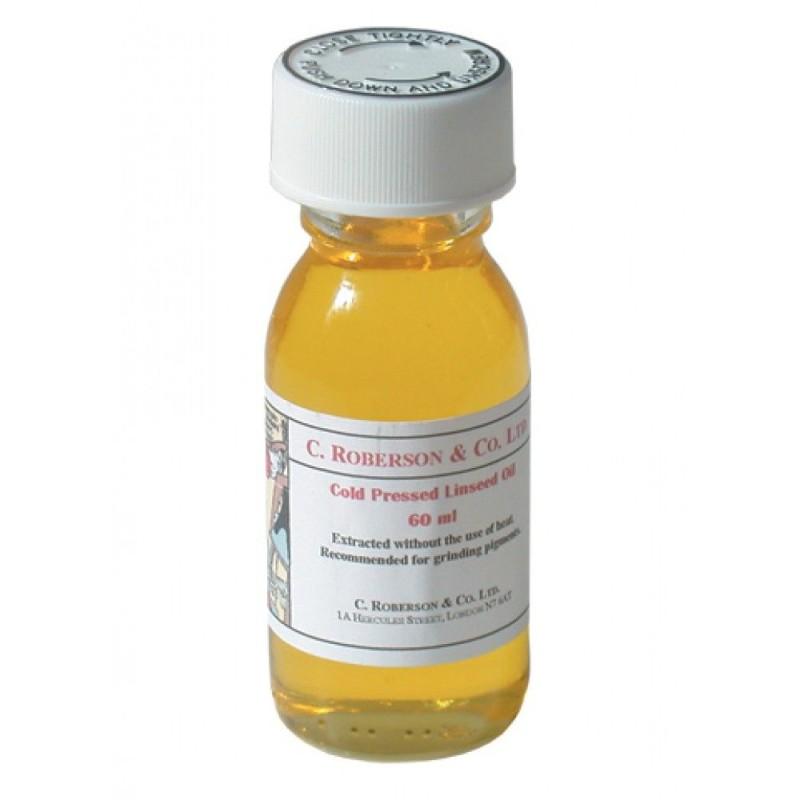
Extracted without the use of heat, Cold Pressed Linseed Oil is a more traditional option that retains more natural resins, offering superior gloss & strength with a slightly quicker drying time than it’s Refined cousin.
.
How To Use Linseed Oil in Painting
As amazing as Linseed Oil can be, when used incorrectly it can make or break your art. To help you along the way, here are several handy tips to finding long-term success with this versatile medium:
Mix sparingly
Always start small by mixing one or two drops directly on your palette before fully committing. Remember, moderation is key.
Avoid overuse
Similar to starting small, if there’s too much Linseed Oil in a finished piece it can lead to unfortunate wrinkling or yellowing over time.
Follow the “fat over lean” rule
Each subsequent layer should contain slightly more oil than the one beneath, to prevent cracking or warping. For more on this, check out our Oil Drying Times blog!
.
Maintaining Your Brushes
When using Linseed Oil (or any other oil painting medium), ensuring your brushes are thoroughly cleaned beforehand is crucial. We recommend using either a solvent like Barrettine's Genuine Turpentine or perhaps a less harsh alternative like the Zest-It or Masters ranges.
For more on maintaining your brushes, including product recommendations and best practices, check out “How to Clean Oil Paint Brushes: A Step-by-step Guide”.
.
In Summary
With its ability to modify consistency, enhance colours and strengthen paint layers, it’s easy to see how Linseed Oil and its many forms are often considered the backbone of an oil painter’s collection.
Through an understanding of this versatile medium and plenty of experimentation, you too can unlock greater control, depth and beauty in your work.